Signs You Need a Virtual CISO

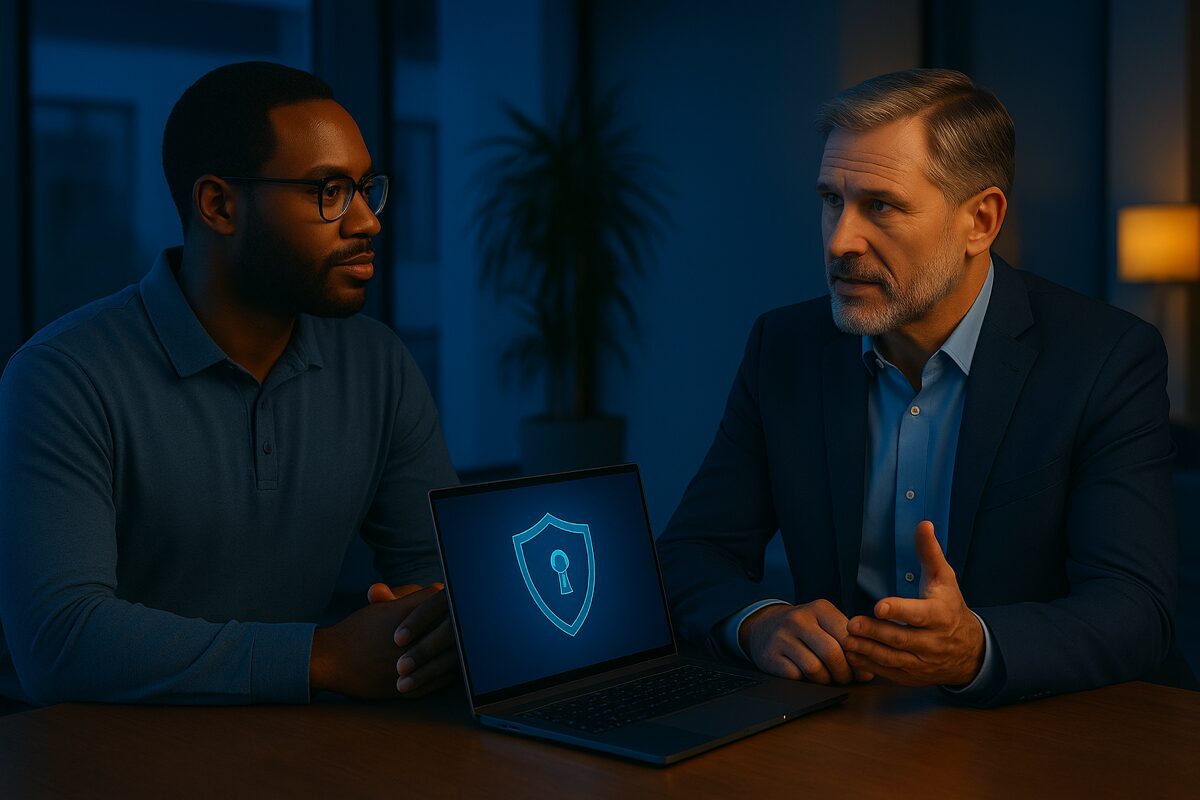
Two business professionals in a modern office analyzing cybersecurity strategy on a laptop, representing the role of a Virtual CISO in corporate risk management.

Cybersecurity is no longer just an IT problem—it’s a business risk. And for mid-market organizations juggling growth, compliance, and digital transformation, that risk is growing faster than internal teams can manage. A Virtual Chief Information Security Officer (vCISO) offers leadership-level cybersecurity guidance without the full-time cost. But how do you know when your organization is … Read more

How Business Leaders Should Evaluate Cybersecurity Solutions in 2026

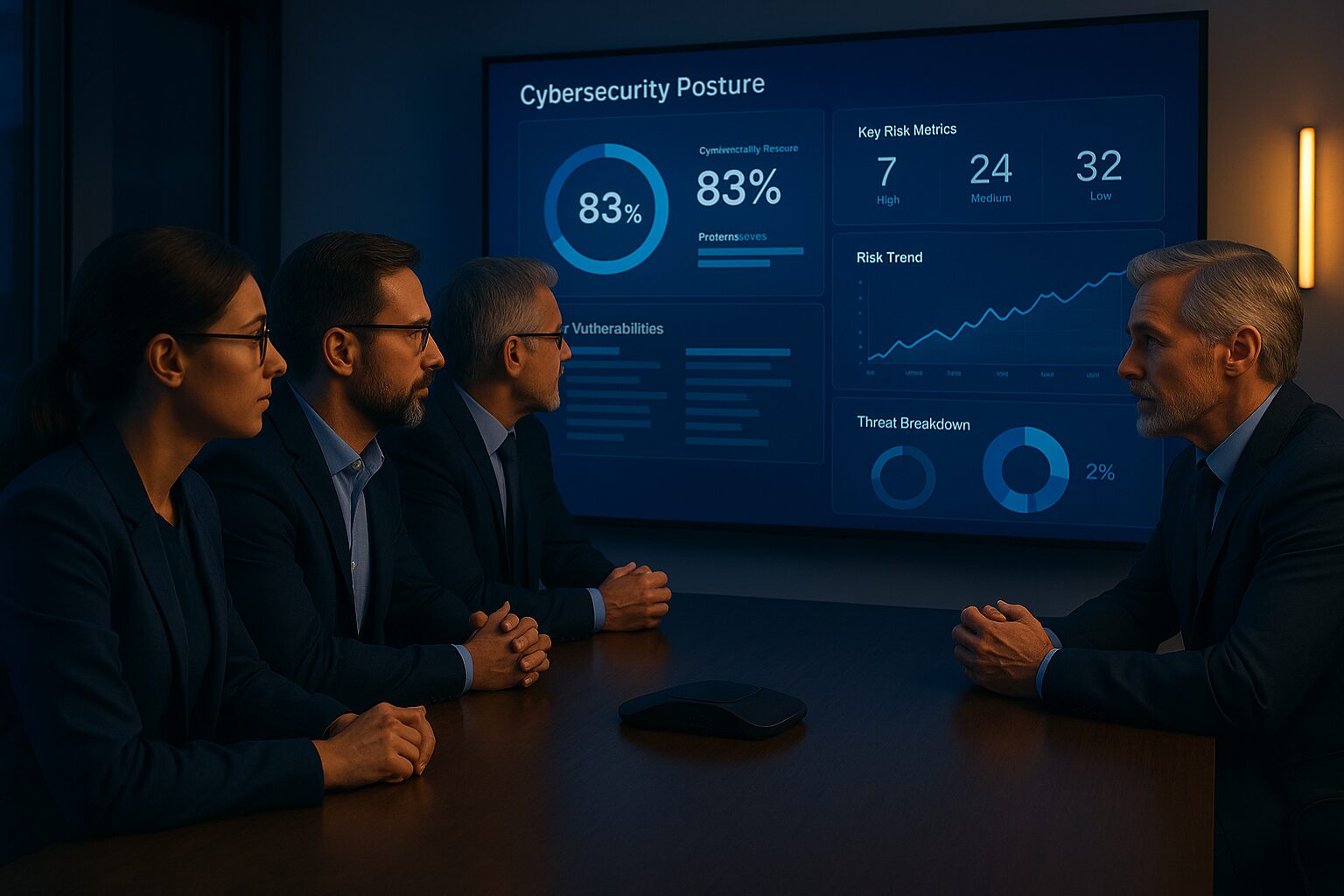
A light-skinned business executive in a modern office space reviews cybersecurity metrics on a digital dashboard alongside a technology consultant, symbolizing strategic evaluation of enterprise security solutions.

In 2026, cyber threats are not just an IT problem—they’ve become a boardroom concern. Cybersecurity now tops the list of business risks for many organizations, with 72% of U.S. business leaders seriously worried about cyberattacks on their companies. This concern is well-founded: industry data shows that nearly 60% of businesses experienced a successful cyberattack in … Read more

Healthcare Cyber Risk Management: Why Cybersecurity Belongs in the C-Suite

A healthcare executive in a hospital setting consulting with a cybersecurity expert in a modern workspace, symbolizing the integration of IT risk into clinical and operational decision-making.

What is healthcare cyber risk management? Healthcare cyber risk management is the practice of treating cybersecurity as an enterprise governance function rather than an IT department responsibility. It requires board-level oversight, C-suite accountability, integration of cyber risk into enterprise risk management frameworks, and alignment of cybersecurity strategy with patient safety and clinical continuity objectives. When … Read more

What Does a vCISO Do?

A middle-aged Caucasian cybersecurity executive stands in a modern office, attentively reviewing data on a digital screen displaying charts and risk metrics.

A vCISO (virtual Chief Information Security Officer) is a senior cybersecurity executive who manages your organization’s security program on a part-time or fractional basis. They own the same responsibilities as a full-time CISO: security strategy, risk management, compliance oversight, incident response planning, and board reporting. The difference is the engagement model: you get C-suite security … Read more

Top 5 Cyber Threats Targeting Orthopedic Practices in 2026

A healthcare IT professional in a modern medical office reviews cybersecurity alerts on a screen, representing digital threats targeting specialty clinics.

What are the top cyber threats facing orthopedic practices? The top five cyber threats targeting orthopedic practices are: ransomware attacks that encrypt patient records and halt operations, phishing emails that compromise staff credentials, direct hacking and data breaches targeting EHR systems, insider threats from staff or vendor misuse, and third-party vendor breaches through connected billing … Read more

How to Build a Cost-Effective IT Roadmap for 2026

A professional woman with light skin, focused on her laptop screen, reviewing a strategic IT roadmap in a modern office setting.

Technology is becoming a top investment priority for business leaders. In fact, a recent Gartner survey found 77% of CFOs plan to increase their tech budgets in 2025, far outpacing other expense categories. This trend underscores the critical role of IT in driving growth and efficiency. Yet for many mid-market companies, building a cost-effective IT … Read more

Fractional CIO vs. Fractional CISO: What’s the Difference and When Do You Need Each?

Two business professionals in discussion, representing strategic IT and cybersecurity leadership roles, in a modern office setting with Meriplex branding.

A fractional CIO leads your IT strategy: technology roadmap, systems architecture, digital transformation, and IT investment decisions. A fractional CISO leads your security program: risk management, compliance, incident response, and cybersecurity governance. The CIO role is about making technology work for the business. The CISO role is about protecting the business from technology risk. Most … Read more

Healthcare IT Security in 2026: A Strategic Guide for CIOs and IT Leaders

A middle-aged male healthcare CIO sits at a desk reviewing a digital dashboard displaying IT security metrics, reflecting strategic priorities in a modern clinical office environment.

What are the top healthcare IT security priorities for 2026? The six healthcare IT security priorities for 2026 are: strengthening identity and access management, implementing Zero Trust in clinical settings, modernizing endpoint protection, planning for ransomware incidents, aligning with HIPAA and 405(d) frameworks, and securing cloud and hybrid infrastructure. Each addresses a distinct attack vector … Read more

Choosing a Cybersecurity Services Provider in Dallas: A Guide for Growing Businesses

A professional man in a modern office in Dallas, reviewing cybersecurity strategy on a computer screen with a city skyline visible through the window—representing decision-making for selecting a cybersecurity services provider in a growing business environment.

Picture this: A Dallas-based company with 300 employees is hitting its stride—releasing new products, expanding into cloud services, and onboarding dozens of new clients. Then one morning, everything grinds to a halt. A cyberattack strikes, locking vital systems and exposing customer data. It’s a nightmare scenario that mid-market businesses (around 200–500 employees) can no longer … Read more

Zero Trust vs Traditional Network Security: ROI & Risk Comparison

Two IT professionals facing each other in a modern office setting, divided by contrasting lighting—one side warm and static, the other cool-toned with dynamic digital overlays—symbolizing the comparison between traditional network security and Zero Trust architecture.

Traditional network security was built for a different time. The idea was simple: build a wall, protect what’s inside. That model assumes you know where “inside” is and that what’s outside is the only threat. In 2025, that assumption falls apart quickly. Most mid-market environments span cloud apps, remote users, vendor integrations, personal devices, and … Read more