MSSP for Healthcare: What HIPAA Requires from Your Security Partner

Healthcare IT security professional reviewing cybersecurity dashboards and network monitoring systems in a modern healthcare office.

A managed security service provider for healthcare is a third-party organization that takes operational responsibility for the security controls a covered entity must maintain under the HIPAA Security Rule, including continuous monitoring, incident response, risk analysis support, and the documentation that OCR expects to see in an investigation.  What separates a qualified healthcare MSSP from … Read more

Questions to Ask HIPAA Managed IT Providers: A Hospital Evaluation Guide

Healthcare IT professional reviewing compliance checklist and cybersecurity dashboard in a modern healthcare office environment.

Managed IT services for hospitals means outsourcing IT infrastructure, cybersecurity, and HIPAA compliance operations to a third-party provider under a formal service-level agreement. When evaluating providers, hospitals should ask specific questions across four risk categories: HIPAA documentation and audit readiness, managed detection and response for clinical networks, ransomware resilience and backup recovery, and subcontractor HIPAA … Read more

HIPAA Compliance for GI Practices: Colonoscopy Records, PHI, and Risk Assessments

A patient logs into your portal two days after her colonoscopy and sees a biopsy result that suggests malignancy—before anyone from your practice has called her. That result was sitting in an insufficiently secured portal, accessible with a four-character password and no MFA. That is a HIPAA problem, a patient safety problem, and a liability … Read more

HIPAA-Compliant MSP: How to Choose the Right Healthcare IT Partner

What makes an MSP HIPAA-compliant? A HIPAA-compliant MSP meets the technical, administrative, and physical safeguard requirements of the HIPAA Security Rule for all ePHI they handle, signs a Business Associate Agreement before accessing patient data, and can demonstrate compliance through documented policies, audit logs, and third-party certifications like SOC 2 Type II. Healthcare organizations handle … Read more

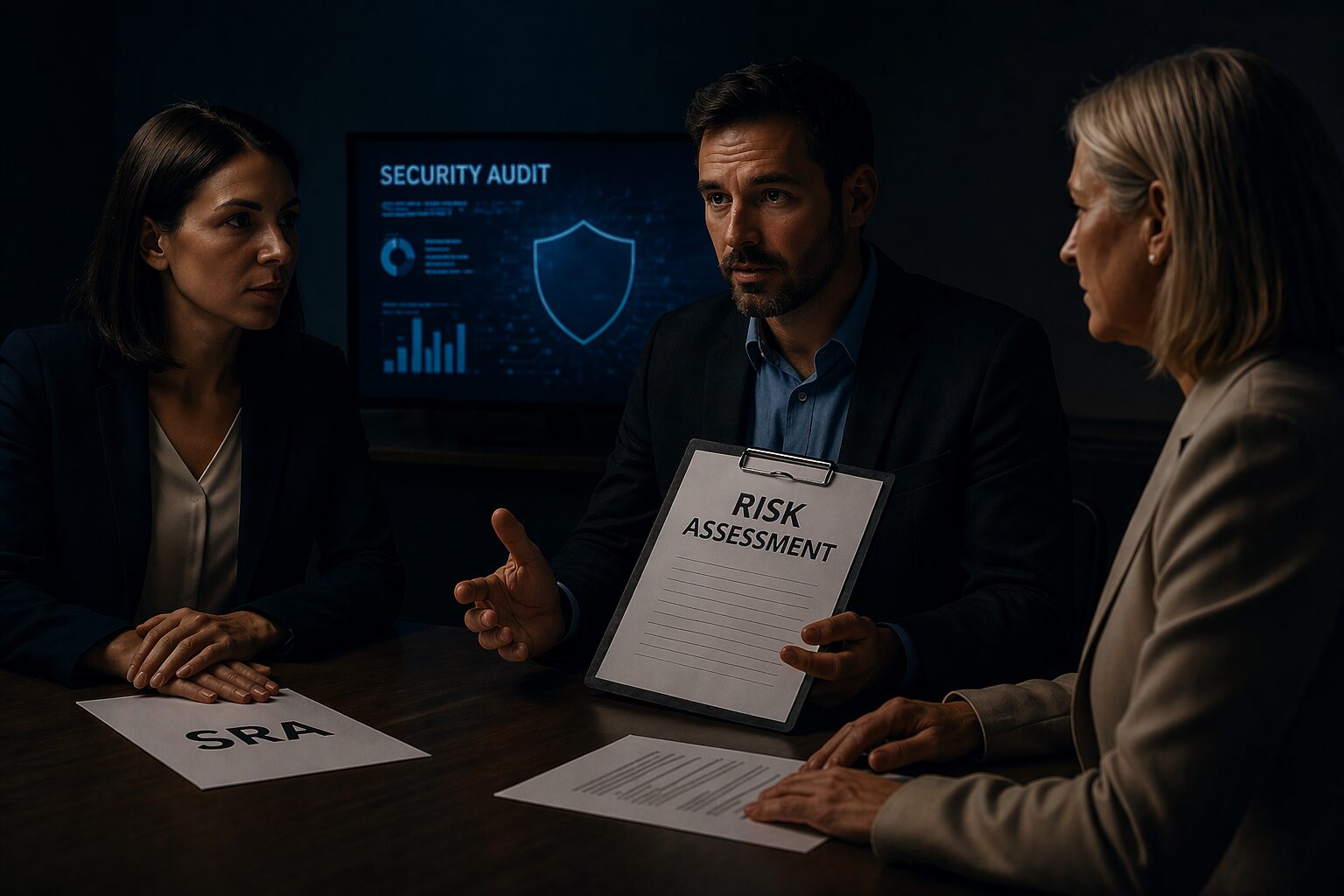
Healthcare SRA vs. Risk Assessment: What Is the Difference and Why It Matters

What is an SRA in healthcare? A Security Risk Assessment (SRA) in healthcare is a mandatory HIPAA evaluation of risks to electronic Protected Health Information (ePHI). It identifies where ePHI is stored and transmitted, assesses threats and vulnerabilities, evaluates existing safeguards, assigns risk levels, and produces a prioritized remediation plan. The HIPAA Security Rule requires … Read more

Compliance Consulting for Automotive Dealerships Facing New Data Privacy Rules

Automotive dealerships across the U.S. are navigating a wave of evolving data privacy and cybersecurity regulations. From the revised FTC Safeguards Rule to a growing patchwork of state-specific privacy laws, compliance expectations are not only more stringent—they’re more complex. For many dealership leaders, keeping up with these shifts while managing day-to-day operations is becoming increasingly … Read more

HIPAA Compliance Checklist 2026: A Guide for Healthcare Providers

Doctor looking at a HIPAA compliance checklist

What does a HIPAA compliance checklist cover? A HIPAA compliance checklist covers the three safeguard categories of the HIPAA Security Rule: administrative safeguards (risk assessments, policies, training, BAAs), physical safeguards (facility access, device security, hardware disposal), and technical safeguards (encryption, access controls, audit logs, incident response). It also covers documentation requirements OCR expects during audits … Read more

5 Reasons Senior Living Communities Should Conduct Annual Security Risk Assessments

Security threats aren’t just a hospital problem anymore. Senior living communities are becoming a prime target for cyberattacks, data breaches, and compliance audits—and that makes an annual security risk assessment for senior living more important than ever. The consequences go far beyond fines. We’re talking about compromised patient records, stalled operations, and lost trust from … Read more

How to Prepare Your Senior Living Community for a Security Audit

Imagine this. An auditor walks into your senior living community, clipboard in hand, ready to assess your compliance with HIPAA, FTC safeguards, and a growing list of other regulatory standards. Do you feel confident that your systems, policies, and teams are ready? Or do you feel the subtle panic of wondering where your last security … Read more

Understanding the CMMC 2.0 Framework & Levels

The DoD’s Cybersecurity Certification Model Cybersecurity Maturity Model Certification, often called CMMC, is a program designed by the Department of Defense. It is a standard and certification model for defense contractors handling sensitive agency information. Before launch, DoD developed many iterations of the program to ensure contractors follow a unifying approach to protect sensitive defense information. … Read more