What Does a vCISO Do?

A middle-aged Caucasian cybersecurity executive stands in a modern office, attentively reviewing data on a digital screen displaying charts and risk metrics.

A vCISO (virtual Chief Information Security Officer) is a senior cybersecurity executive who manages your organization’s security program on a part-time or fractional basis. They own the same responsibilities as a full-time CISO: security strategy, risk management, compliance oversight, incident response planning, and board reporting. The difference is the engagement model: you get C-suite security … Read more

Top 5 Cyber Threats Targeting Orthopedic Practices in 2026

A healthcare IT professional in a modern medical office reviews cybersecurity alerts on a screen, representing digital threats targeting specialty clinics.

What are the top cyber threats facing orthopedic practices? The top five cyber threats targeting orthopedic practices are: ransomware attacks that encrypt patient records and halt operations, phishing emails that compromise staff credentials, direct hacking and data breaches targeting EHR systems, insider threats from staff or vendor misuse, and third-party vendor breaches through connected billing … Read more

Healthcare IT Security in 2026: A Strategic Guide for CIOs and IT Leaders

A middle-aged male healthcare CIO sits at a desk reviewing a digital dashboard displaying IT security metrics, reflecting strategic priorities in a modern clinical office environment.

What are the top healthcare IT security priorities for 2026? The six healthcare IT security priorities for 2026 are: strengthening identity and access management, implementing Zero Trust in clinical settings, modernizing endpoint protection, planning for ransomware incidents, aligning with HIPAA and 405(d) frameworks, and securing cloud and hybrid infrastructure. Each addresses a distinct attack vector … Read more

Zero Trust vs Traditional Network Security: ROI & Risk Comparison

Two IT professionals facing each other in a modern office setting, divided by contrasting lighting—one side warm and static, the other cool-toned with dynamic digital overlays—symbolizing the comparison between traditional network security and Zero Trust architecture.

Traditional network security was built for a different time. The idea was simple: build a wall, protect what’s inside. That model assumes you know where “inside” is and that what’s outside is the only threat. In 2025, that assumption falls apart quickly. Most mid-market environments span cloud apps, remote users, vendor integrations, personal devices, and … Read more

vCISO vs. Full-Time CISO: Cost Breakdown, Pros and Cons, and Which Is Right for You

Two cybersecurity professionals engaged in discussion at a modern office desk, representing the comparison between virtual CISO and full-time CISO roles in cost, value, and use cases.

A vCISO (virtual Chief Information Security Officer) delivers the same strategic security leadership as a full-time CISO at roughly 30 to 50 percent of the cost, on a part-time or project basis. A full-time CISO is a permanent executive hire with daily, embedded involvement. The right choice depends on your organization’s size, security program maturity, … Read more

Is MDR Worth the Investment? A Cost vs. Risk Breakdown

Two cybersecurity professionals in a modern office environment reviewing data on a screen, symbolizing analysis of Managed Detection and Response (MDR) effectiveness

Cyber threats are escalating across the board, and mid-market organizations – especially in healthcare – find themselves squarely in attackers’ crosshairs. Many smaller hospitals and clinics mistakenly thought they were “too small” to be targeted, but in 2022 over 58% of ransomware attacks hit SMBs (small-to-mid businesses). Healthcare breaches have become alarmingly frequent and costly; … Read more

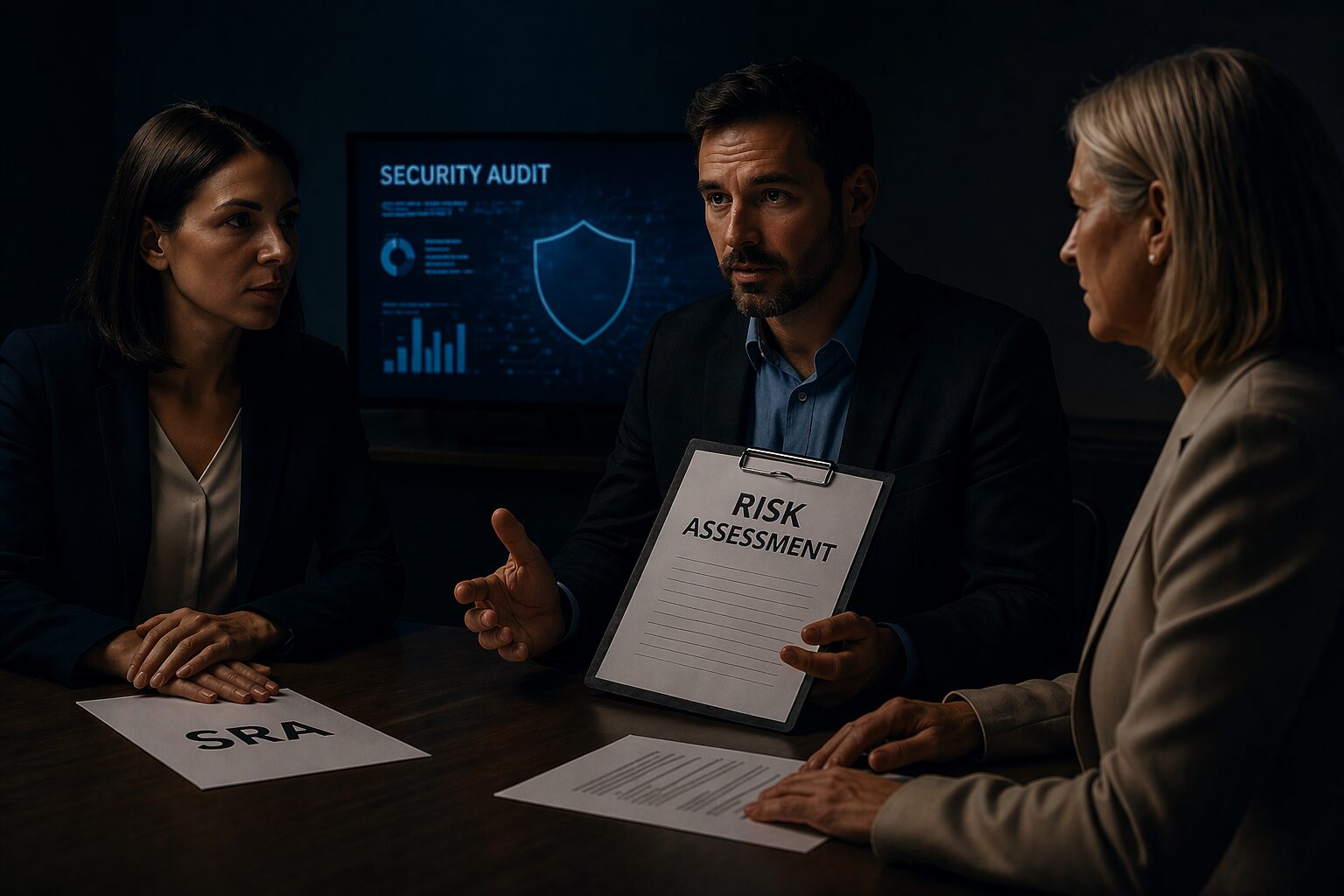
Healthcare SRA vs. Risk Assessment: What Is the Difference and Why It Matters

What is an SRA in healthcare? A Security Risk Assessment (SRA) in healthcare is a mandatory HIPAA evaluation of risks to electronic Protected Health Information (ePHI). It identifies where ePHI is stored and transmitted, assesses threats and vulnerabilities, evaluates existing safeguards, assigns risk levels, and produces a prioritized remediation plan. The HIPAA Security Rule requires … Read more

Compliance Consulting for Automotive Dealerships Facing New Data Privacy Rules

Automotive dealerships across the U.S. are navigating a wave of evolving data privacy and cybersecurity regulations. From the revised FTC Safeguards Rule to a growing patchwork of state-specific privacy laws, compliance expectations are not only more stringent—they’re more complex. For many dealership leaders, keeping up with these shifts while managing day-to-day operations is becoming increasingly … Read more

Managed Detection & Response vs Traditional AV: What Mid-Market IT Leaders Need to Know

Woman in dark office using antivirus software on a desktop computer, illuminated by a warm desk lamp with a cool-toned tech backdrop.

If you’re a mid-sized business, here’s a hard truth: you are squarely in the crosshairs of cyber attackers. For years, many assumed hackers only cared about big enterprises with deep pockets. But the data tells a different story. According to IBM’s 2024 Cost of a Data Breach Report, mid-sized companies now face average breach costs … Read more

Compliance Challenges During M&A (And How to Stay Audit-Ready)

compliance challenges in M&A

Mergers and acquisitions (M&A) can feel like tightrope walks for mid-market and enterprise companies. There’s the thrill of growth and new opportunities, but also a lurking risk that can topple even the best deals: compliance. When two organizations become one, aligning their technology and processes isn’t just an IT chore–it’s a compliance minefield. Overlooking how … Read more